
The choices we make
This final essay of the year is a meditation on the choices we make when life puts us at a crossroads. It begins with a note to my readers—how could it not?

a note to the readers
I HAVE READERS. I am writing a note to them! Ah, it is surreal. It is unbelievable. It is my wildest dream come true (I need to start dreaming bigger). Having a readership is new. It happened in 2025, and for that, I will remain eternally grateful to this year. My sporadic writings and even publications until last year never had a readership, or at least not substantial enough to reach me. When I created a public Instagram account in 2023 and put “writer” in the bio, a (big) part of me mocked me: Who are you? lol. You are not a writer, writer. A mockery I have lived with and made peace with. For the longest time, I called myself a writer publicly without being able to believe I was one.
In an effort to rectify that, at the beginning of this year, I decided to write and publish an essay (almost) every week. I set a target of forty essays—around forty thousand words. What I am publishing today is my 36th essay, also the last one. It might seem like I didn’t reach the goal, but I did. I am elated, ecstatic that I managed to write these 36 pieces and put them out despite all my self-sabotaging instincts. It is a huge win for me (you have no idea).
There is a highlight on my Instagram named “thank youu” that stores some (only some) of the lovely messages I have received over the last few months from absolute strangers who know me only through my words. It might seem like that highlight is me bragging to the world (and there’s no harm in doing that). But honestly, that highlight is me bragging to myself, showing a middle finger to the part that mocks me constantly. Believe me, I need that brag the most. Every time I struggle to believe I am a writer, every time that mocking voice becomes too loud, I go to that highlight and read those messages. It helps me continue doing what I love.
Having people read your work is a feeling I cannot describe in words (so much for being a writer!). I can live and die for it (okay, too dramatic). I have always, always been a reader. Books have helped me navigate the toughest of times; sentences have given me joy, hope, and warmth. They have helped me wake up in the morning and get on with the day. They have also calmed my nerves and helped me sleep. I am a fan of words. I am fan of writers. I really, truly think they are magicians. What my favorite writers have done for me, if I can do even a fraction of that for someone, I would be in (a writerly) heaven.
If you are someone who has read my work this year, please know that you have changed my life in the best way possible. If you have messaged or commented to tell me how an essay of mine made you feel, I am forever indebted to you. I am not an inherently confident person. So thank you for helping me believe that I am doing okay.
While I regularly published essays this year, I didn’t submit any fiction—not even one short story. I wrote and rewrote them, but as the deadlines of my favorite magazines approached, I was overcome with crippling anxiety. I couldn’t make myself submit anything (as silly as it sounds). I do hope to change this in the coming year. I want to get those stories out of my drafts. It doesn’t matter if or when they find a home (okay matters a little); but the priority is to be able to submit them.
I want to continue writing here (this is home territory) for you and for me. I want to continue reading—which comes easily to me because I survive on a regular dose of books. I also want to continue hosting my tiny little book club (based in Bengaluru).
I know the world has moved to videos (largely), and everyone is making and watching reels and vlogs. But I still believe we will find our way back to words, to books, to cinema, and to art made by and for humans.
Thank you, dear reader. I wish you a very happy new year. I hope you stay warm. I hope you and I get to read more books, sip good coffee, sit in the sun, and walk our way through hard feelings.
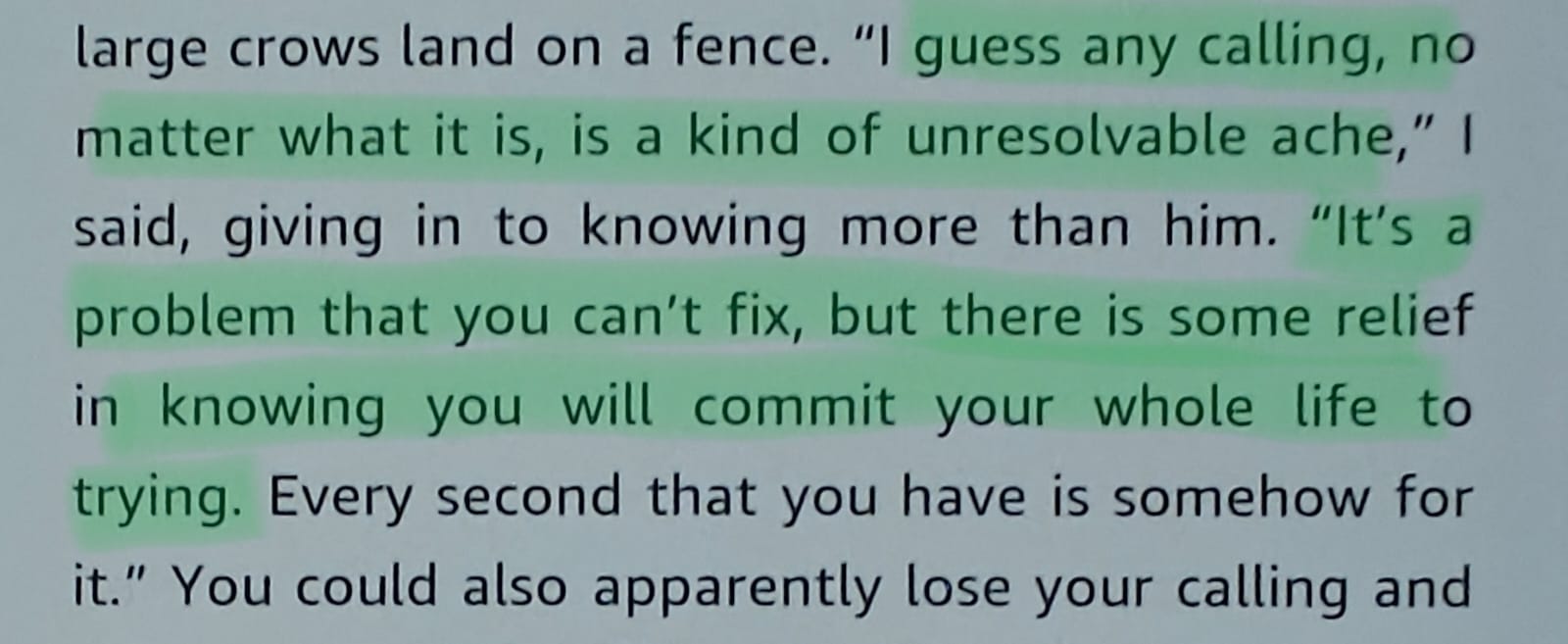
Leaving you with an excerpt from All Fours by Miranda July. See you next year :)
the choices we make
Some memories haunt you because they deserve to, but there are also those that you know have overstayed their welcome. Why the hell do you even remember this silly little thing from ten years ago? But you do. For me, one of those memories is 17-year-old me sitting in a classroom listening to the story of this man—my teacher, who must have been in his late thirties then—and how his life has been nothing but an array of easy choices. ‘Whenever I was at a crossroads, I chose the easy path,’ he said. I don’t remember if he was proud of where those choices have led him or if he was lamenting. But since then, in hindsight, I have always wondered if I can categorize or call my choices easy. And if I can, what does that say about me? Also, what are the parameters I am judging a choice on? What makes me label a choice easy?
The world I come from, the gender I belong to, romanticizes suffering and hardships—it could be a way to survive it. Being carefree and joyful is considered frivolous and childlike, while being somber and serious is supposedly important and mature. Sacrificing yourself for the greater good apparently makes you great. Not respecting your own being enough to give it the love it deserves is not frowned upon or considered a sin (it should be). Indian institutions—social, educational, familial (think: family, school, marriage, religion)—thrive on glamorizing restraint and self-sacrifice. You can’t pour from an empty cup gets stomped upon and buried under the heap of duties and responsibilities, the should-s and the ought to-s.
There is some merit in pausing to define what exactly is easy and how the passage of time disrupts that definition. Just a few years ago, doing what’s expected of me, going with the flow without ruffling feathers seemed the easiest thing to do for the non-confrontational, anxious me. I am still the same—non-confrontational and anxious—but I’ve realized that if you listen to the world over your body, it eventually catches up to you. And so the immediate ease of taking the path of least resistance is swallowed and digested by the suffocation that comes from ignoring your own voice. So then easy isn’t the choice that’s easier to make in the moment; easy is what you can live with.
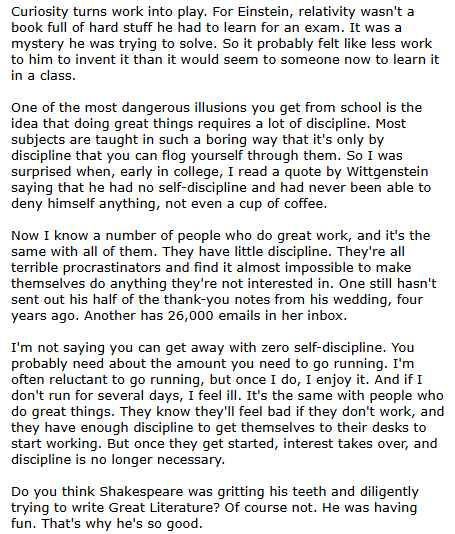
The connotation of working ‘hard’ is also strange in the Indian education system. Imagine a hardworking student, and be assured that they would look bogged down, unhappy, and drained of all fun. Even an average student, in their wildest imagination, does not consider that they could choose to work ‘hard’ at something not because they are supposed to, but because they are genuinely obsessed with it.
In 2018, I got back to education after working for two years. I still remember sending this annoyingly chirpy and happy audio note in a WhatsApp group of friends and rambling about how much I enjoyed being in the class I had just come out of. I was surprised—it was a revelation for me that I could love being in a classroom. It’s unfortunate that the revelation happened at 23. It is so damn fortunate that it happened. I was finally at home in a humanities college after being a science student all my life. So then easy isn’t the pursuit that gives you the best worldly results; easy is recognizing and following your curiosity.
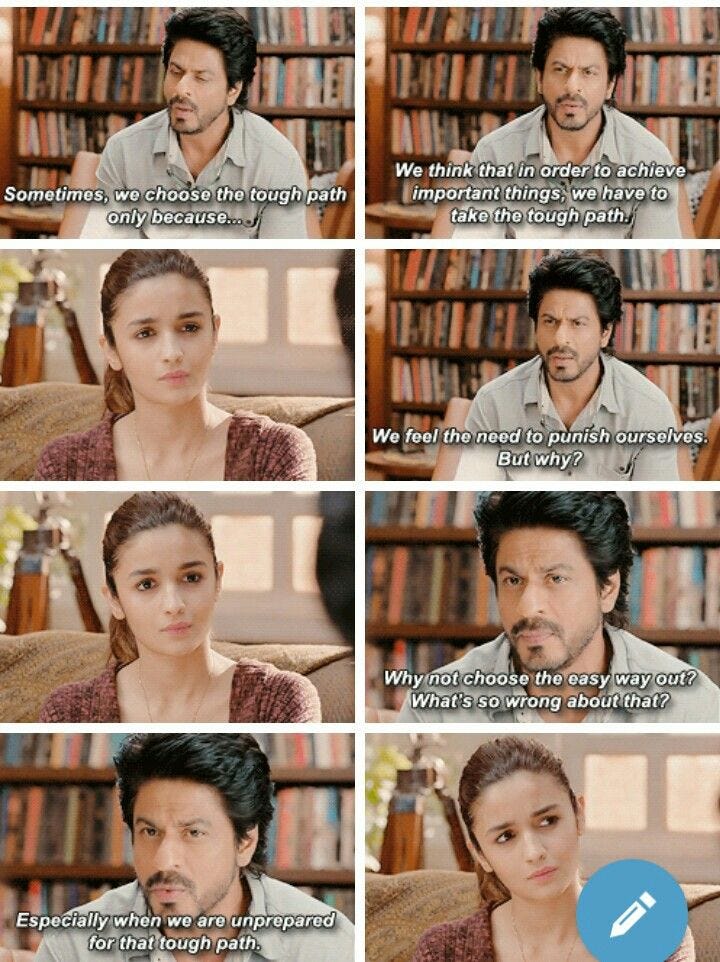
I think at some point in your childhood you are told that the easy (fun) path is the wrong path, which then leads you to the understanding that the harder one should be the right one. The burden of ‘doing the right thing’ could be exhausting because the idea of ‘right’ keeps changing as per the convenience of those who hold power. And hence it’s important to keep questioning it. Who is it ‘right’ for? Who is it serving? In 2016—the year I graduated—India’s most beloved actor played the role of a therapist and told Kaira (and the world) that choosing the easy way is not always as bad as we make it out to be. Being in a job you constantly dread, staying in relationships that drain you are all hard things to do, but not necessarily right.
I love fandoms—absolutely adore them. But I have never been a part of one. I have never really worshipped an artist, never loved one enough to defend all their wrongs. Even when an artist’s work moves me, I’ve never been someone who tears up at their wedding or cries at their death. All this was true until I went down the rabbit hole of reading Andrea Gibson’s work the day they died from cancer at the age of 49. I had come across their work before but never really read it for hours like I did that day. I knew of them but only truly read about who they were the day they stopped being. I sobbed in bed. I read their poems and cried. Gibson’s deep compassion for the human condition made my heart ache—they weren’t supposed to die, not so young.
I think about death often, sometimes obsessively, sometimes so vividly that I wouldn’t dare let anyone into my thoughts. I was 22, lying on a stretcher in unbearable pain, eavesdropping on the conversation of doctors and nurses around me, waiting for my parents, and desperately praying for life. I was scared of anesthesia because I didn’t know if I would wake up on the other side—I did. That day divided my life into a before and an after. My twenties were filled with small and big health scares and occasional hospital visits. And so I am somewhat aware of what it takes to make peace with your mortality without losing hope and joy. It’s easy to slip into the abyss. It’s frustratingly hard to accept and embrace your life for what it is. And Andrea Gibson held their life so softly, so lovingly, that it broke my heart when life escaped their grasp.
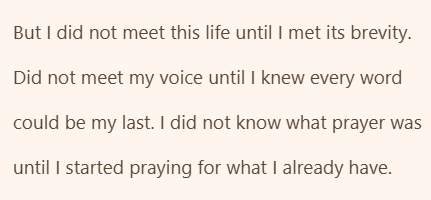
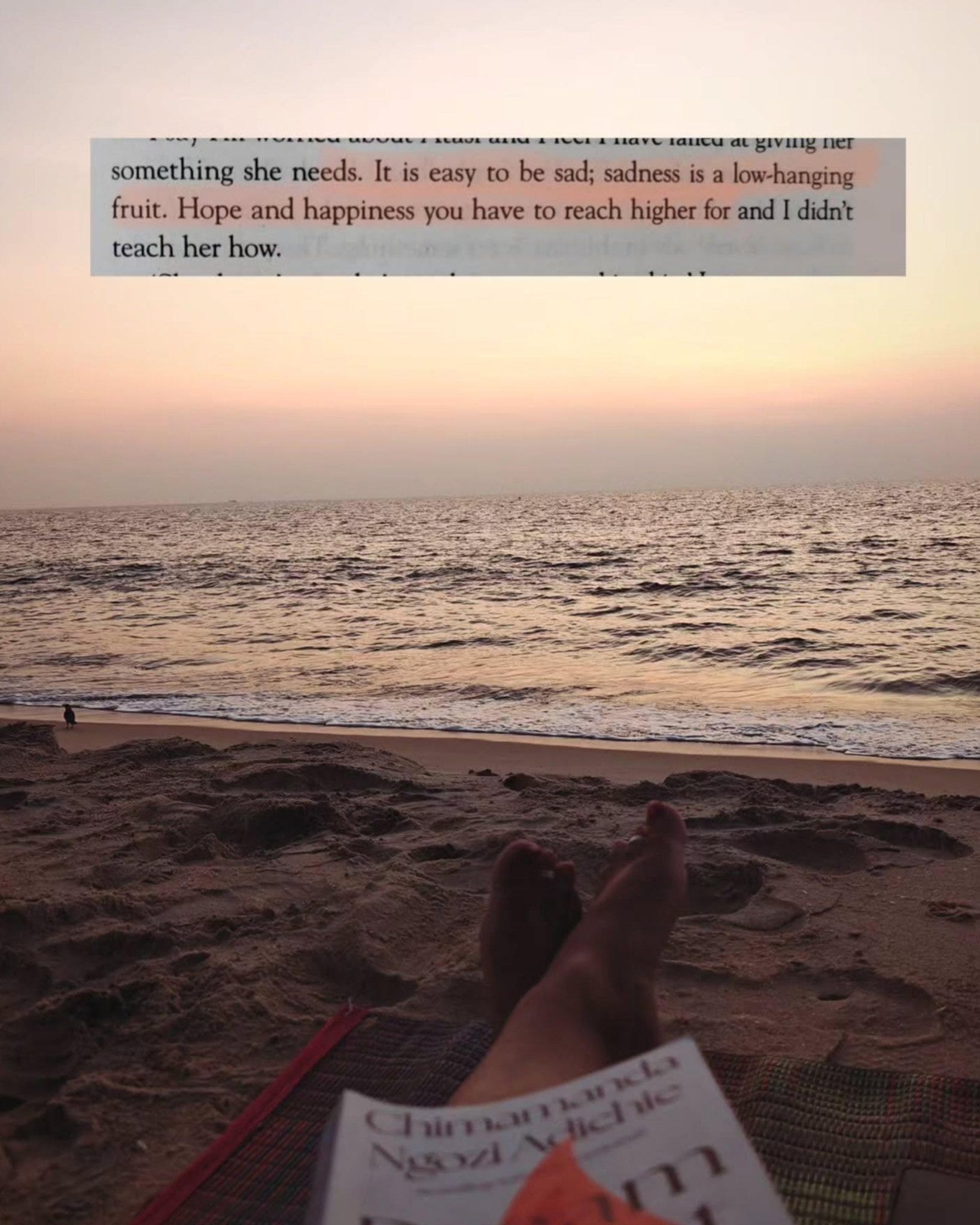
I don’t know if it makes sense to label our choices as easy or hard. It feels too simplistic, too flattening, and very unnecessary. What I do know, though, is that it is easy to let life pass by, to be numb, to dissociate, to be a pessimist, to give up, to lose hope, to sit on a high horse and judge others, to stop trying, to let resentment fester, to remain in limbo, to never stand up for yourself or others, to let fear dictate your choices, to abandon yourself, to insulate yourself from pain, and to grow bitter in the face of suffering. It is extremely hard to look for hope, to sit with uncertainty, to resist the urge to create answers where there are none, to endure the discomfort of knowledge, to turn away from the bliss of ignorance, and to allow yourself to feel pain—for in shutting out pain, you also shut out joy.
If you carry one thing into the new year, let it be the choice to find hope in broken places, kindle light in the darkest corners, and stay fully alive for as long as you draw breath.
Have read your on and off year...They are very poignant...This one really struck a chord, especially when you write about the so called "easy decisions"...Hope to read essays by you in the upcoming year as well 😊
very nicely written. can relate to this.